




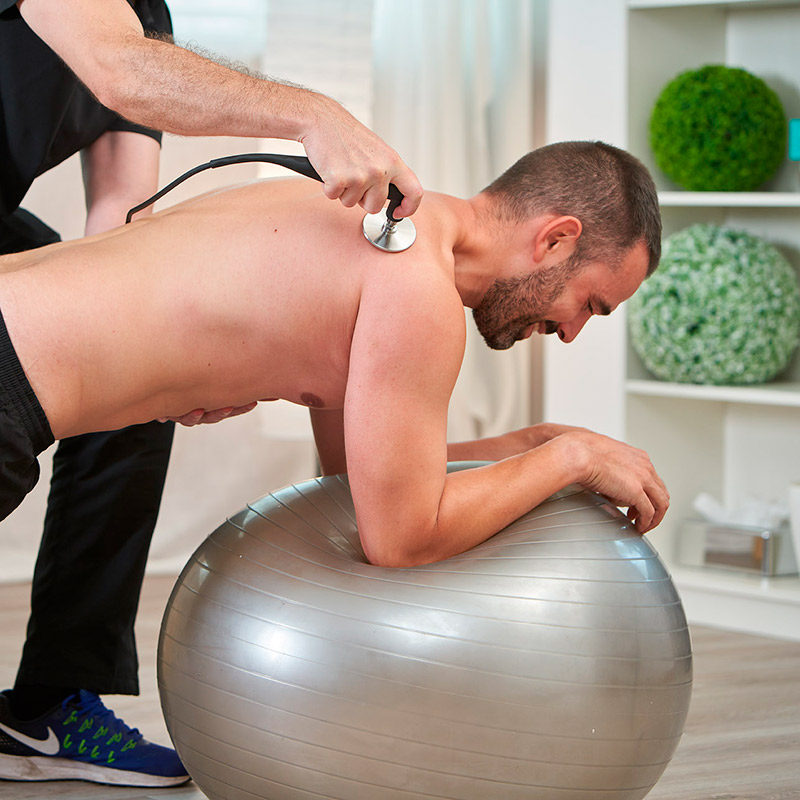



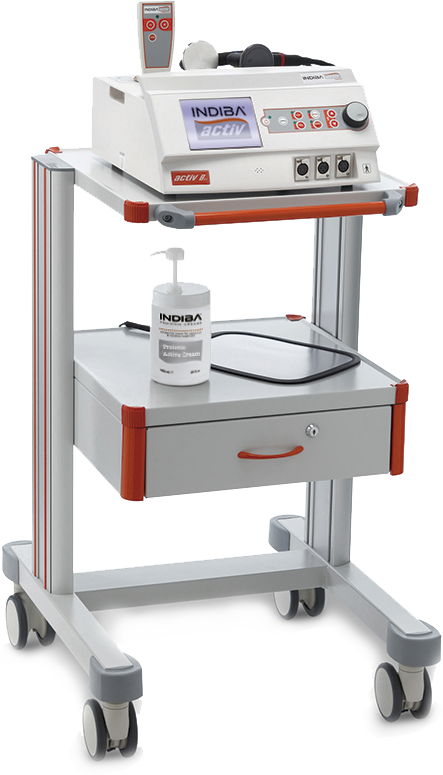
The INDIBA® technology stimulates tissue repair, encouraging the proliferation and differentiation of stem cells, to accelerate recovery from injuries.
The results can be seen from the first session, with a reduction in pain and inflammation.
It has been shown to produce an increase in deep blood flow and therefore an increase in oxygen and nutrients so, when used in combination with manual therapy and the INDIBA® exercise, it gives outstanding results in both acute and chronic injuries such as muscle tears, sprains, tendinitis, bruising, bursitis, fractures, lumbago, neck pain, osteoarthritis, etc.
The INDIBA® therapy can be integrated with manual physiotherapy to obtain better results, as it accelerates the tissue repair process at both the acute and chronic stages of inflammation. It has enabled us to quickly and easily resolve conditions that had previously stagnated, so more and more doctors are recommending its use. The results are even more interesting when combined with manual therapy and exercise, especially when treating sportspeople with chronic conditions.
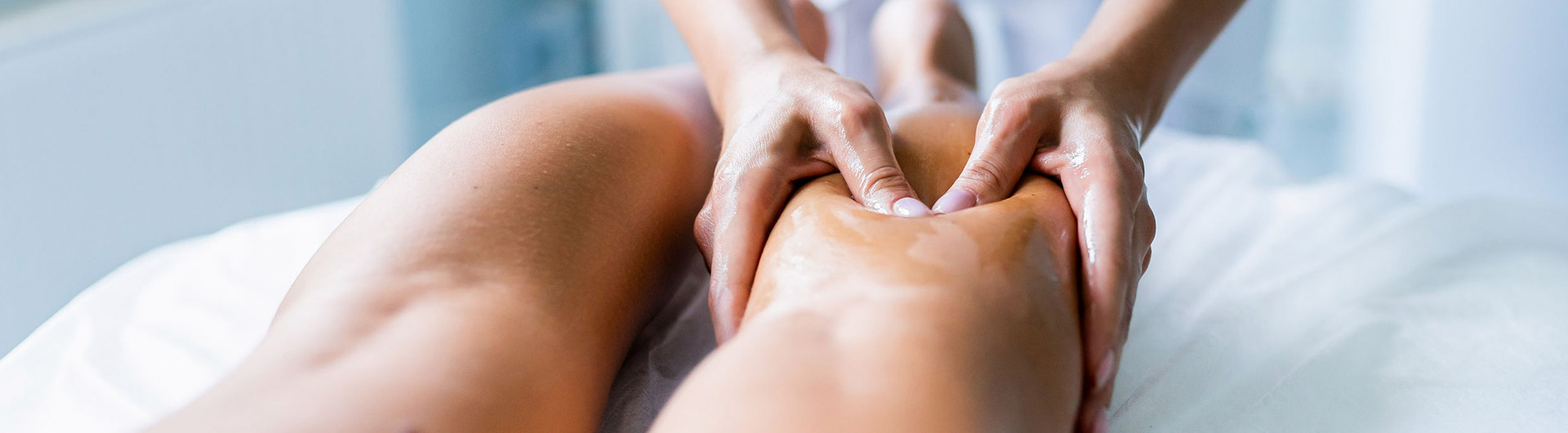
Aesthetic physiotherapy treatments are also provided, obtaining very good results in the treatment of recent scars by reducing inflammation and bruising, which promotes healing. They are also used to treat old scars, as they reduce fibrosis. In localised fat deposits and cellulite, they empty fat deposits and inhibit the production of new fat deposits, while improving the visual appearance of the cellulite.
Integrative medicine encompasses conventional medicine and natural medicine, offering the patient all possible means of a cure. It considers holistic aspects of the individual: physiological, psychological, nutritional and social.
It is important to note that illness often appears due to bad eating habits and behaviour patterns, which weaken the immune system in the long term.
Keeping the body detoxified and the immune system healthy and strong is the most effective way of avoiding illness. Integrative medicine allows for the treatment of patients with chronic conditions who, until now, have been receiving palliative rather than curative care.
The integrated approach enables health to be restored because it involves a holistic analysis of the causes behind a specific condition, so that conventional medication can be reduced (anti-inflammatories, anxiolytics, etc.), by including orthomolecular supplements with natural active ingredients in therapeutic concentrations.
Clinical PNI considers the interactions between the different body systems - psychological, nervous, immune and endocrine – and takes the whole context of the patient into account. “Labels” are avoided that could make the patient’s symptoms worse and, through exhaustive clinical questioning, the physiological and pathological mechanisms that led to the current symptoms are sought.
The main tools used are: in-depth teaching, nutritional recommendations, supplements, prescribing physical exercise, regulating biorhythms, managing the nervous system, etc. The most important thing, however, is to get the patient to manage their own health, to be conscious of the causes that led to spiralling symptoms that prevent him or her from having a “normal” life, and to make gradual, conscious changes in their lifestyle, through dialogue with the therapist, agreeing on and devising new behaviour patterns.
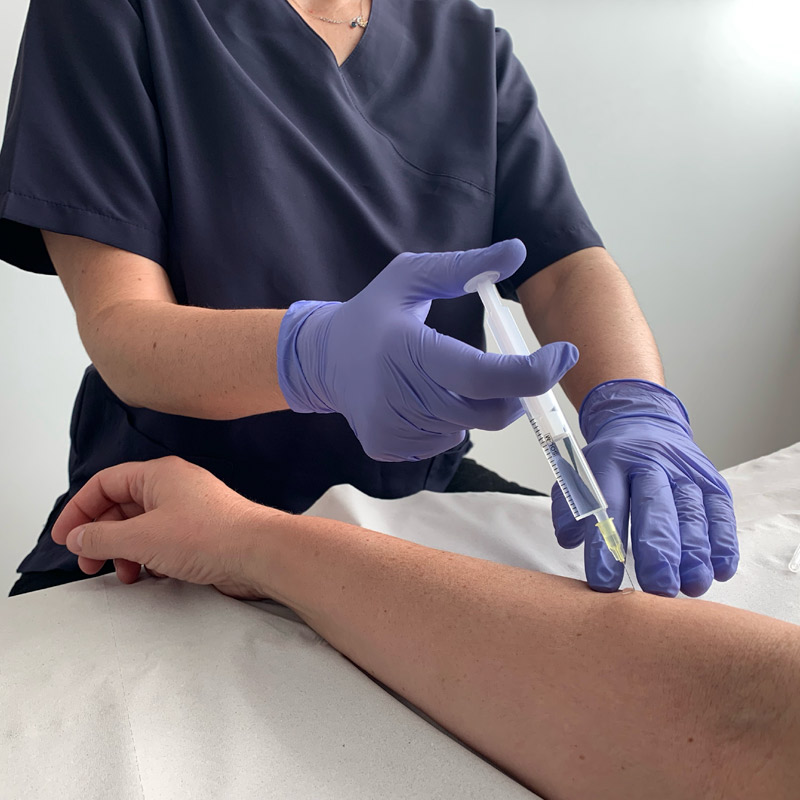
Neural therapy is a regulatory therapy that acts through the nervous system – especially the autonomic nervous system – by injecting small amounts of local anaesthesia in low concentrations, for purposes other than anaesthesia. It seeks, in turn, to neutralise irritations that have come to affect neurovegetative tone over one’s lifetime, and activate the natural tendency towards equilibrium.
By working on the autonomic nervous system that interconnects all the organs, between themselves and the emotional system, it has become a very useful tool in integrative medicine by accessing the psychosomatic sphere.
A primary tool is the patient’s life history, which is carefully analysed to discover any factors that may have altered the equilibrium of the ANS, as that is when the symptoms usually appear.
What conditions does it treat? Muscular pain, migraine, dysfunctional scarring, generalised pain, recurrent infections, herpes, neuralgia... wherever there is a nerve fibre, neural therapy can act.
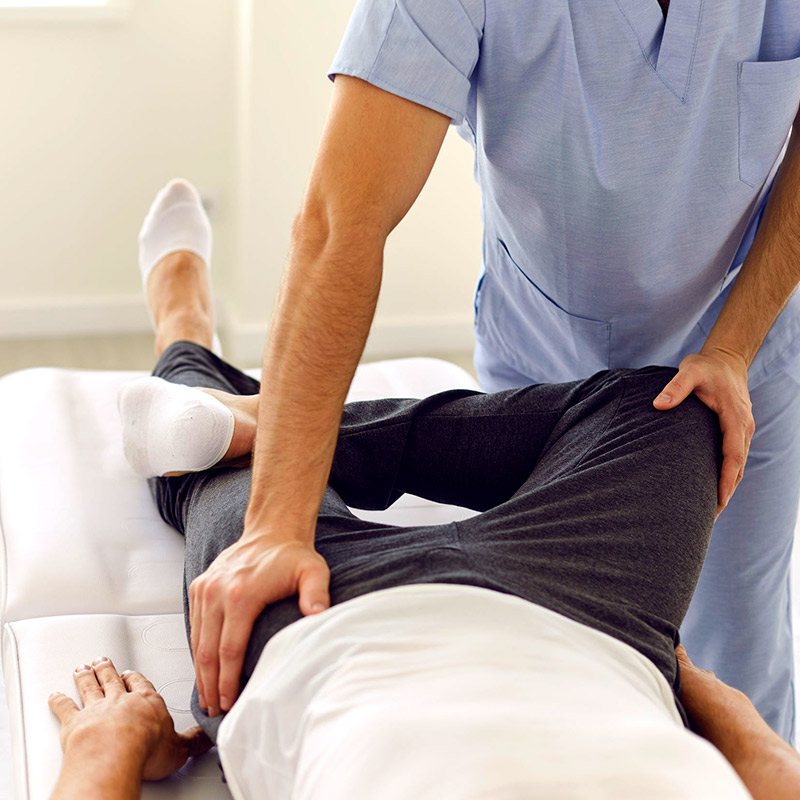
Osteopathy is a discipline that helps patients to restore the equilibrium in various aspects of their health, drawing on the body’s capacities for self-regulation and self-healing, through manual therapy and osteopathic techniques.
A functional diagnosis is carried out, based on a clinical examination and observation, to find any dysfunctions that might have altered regular interaction between the body systems, such as the musculoskeletal, nervous, vascular and visceral systems, while influencing the hormonal, digestive and metabolic systems. All these systems work as one, although, from an osteopath’s point of view, the human body is seen as more than the sum of various anatomical structures – it is one system that seeks equilibrium and is constantly evolving and adapting to our environment.
On the basis of this diagnosis, the osteopath can identify the chains or functional lines that are expressed outside physiology, and work on the different body systems and tissues, using their hands as a tool, to amend the body’s dysfunctional expression and enable it to regain its equilibrium. Part of the diagnosis consists of ruling out or identifying incipient pathological processes, which enables us to carry out early detection more effectively and differentiate between various conditions, so we can direct the patient to the most suitable specialist.
At Medisport, we have incorporated this philosophy into our patient care, to enhance our multidisciplinary approach.